Anion Gap Calculator for Bicarbonate Depletion Analysis
What the Anion Gap Calculator Does
An anion gap calculator helps estimate the difference between measured cations and anions in the blood, which is a key part of acid-base balance review. In practice, it is used to assess anion gap changes, aid in evaluating metabolic acidosis, and estimate bicarbonate deficit when serum chemistry suggests a metabolic abnormality. Because serum bicarbonate decreases in many acidotic states, the calculator can help link a low bicarbonate level with the likely type of acid load and the expected compensatory response.
This is not just a simple number check. As a diagnostic tool, the calculator aids laboratory interpretation by combining electrolytes, pH, and related data to clarify whether the problem is a high anion gap metabolic acidosis or a normal anion gap metabolic acidosis. That distinction matters because it changes the differential diagnosis, the urgency of treatment, and the broader clinical decision support approach used at the bedside.
In short, the calculator helps clinicians and students move from raw lab values to a structured view of the patient’s acid-base disorder, including possible electrolyte imbalance, respiratory compensation, and renal compensation patterns. It is especially useful when evaluating an unexplained bicarbonate level on a routine electrolyte panel or a blood gas.
Calculating Anion Gap and Bicarbonate Shortage
The standard anion gap formula is written as:
Anion gap = sodium - (chloride + bicarbonate)
Within this anion calculation, sodium acts as the primary measured cation, while chloride and bicarbonate represent measured anions. This value suggests unmeasured ions in the serum and offers insight into a possible acid load. A normal result does not exclude disease, but a clearly elevated value often indicates a high-gap process.
The bicarbonate deficit formula is applied to estimate the amount of bicarbonate needed to correct a metabolic acid-base problem. In many clinical settings, bicarbonate deficit is estimated from body weight, target bicarbonate, and current bicarbonate level. The exact equation may vary by protocol, but the clinical goal is similar: determine how much alkali might be needed if bicarbonate replacement is considered. This estimate should be treated as a guide, not a stand-alone treatment plan.
This is the practical workflow most users follow with an anion gap calculator:
- Input sodium, chloride, and serum bicarbonate from serum chemistry or an electrolyte panel.
- Inspect the calculated anion gap.
- If albumin is low, apply albumin correction to avoid underestimating the gap.
- Review blood gas values to relate the result to pH and overall acid-base status.
- When necessary, estimate bicarbonate deficit or base deficit to guide further management.
The relationship between the numbers matters. A lower bicarbonate level with higher chloride often points toward a normal-gap process, while a low bicarbonate level with elevated unmeasured anions often suggests a high-gap process. This combination of values helps identify the underlying metabolic derangement rather than focusing on one lab in isolation.
Inputs Needed for the Calculator
To produce a meaningful value, the calculator uses accurate electrolytes and associated clinical data. The core inputs are usually sodium, chloride, and bicarbonate, but many versions also include potassium and albumin. Potassium may be included in some formulas because it can slightly change the calculated gap, though many standard approaches omit it for simplicity.
A blood gas or arterial blood gas adds valuable support. These values help confirm the presence of acidemia or alkalemia and show whether the serum bicarbonate aligns with the observed pH. A blood gas can also help identify whether the lungs are contributing through respiratory compensation or whether the pattern is primarily renal in origin.
Albumin deserves special attention because it affects the expected baseline anion gap. When albumin is low, the measured gap can look falsely normal, which is why albumin and albumin correction are important inputs or adjustments in many calculators. Without them, a clinically important metabolic acidosis may be missed.
Typical data points used in this kind of calculator include:
- Sodium from the electrolyte panel
- Chloride from serum chemistry
- Potassium, when the calculator includes it
- Albumin for correction of the anion gap
- Blood gas or arterial blood gas values for acid-base context
- pH to define acidemia or alkalemia
Good input quality supports laboratory interpretation. If the numbers are outdated, contaminated, or drawn during rapid fluid shifts, the output may not reflect the current metabolic state. In critical care and emergency medicine, the timing of sample collection can be as important as the equation itself.
Interpreting the Results
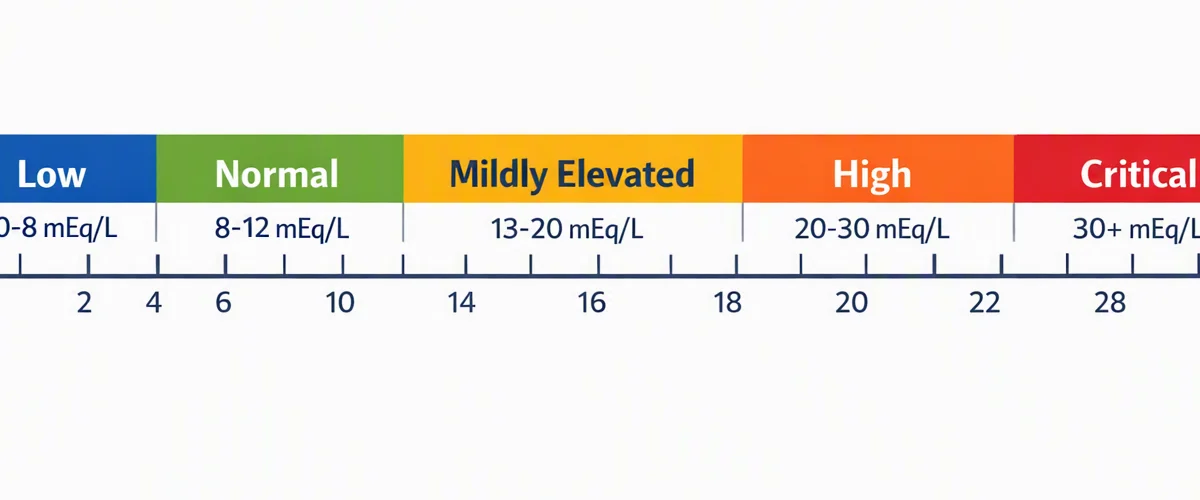
Reading the output starts with the level of the anion gap. A increased anion gap usually means excess unmeasured anions are present, often due to organic acids or impaired clearance. A normal anion gap suggests bicarbonate loss or chloride gain rather than accumulation of unmeasured acids. Both patterns represent a form of acid-base disorder, but they point in different diagnostic directions.
Match the anion gap with the pH from a blood gas. If the pH is low and bicarbonate is low, metabolic acidosis is likely. If the pH is near normal, there may still be a mixed disorder or a compensatory response masking the severity of the process. That is why laboratory interpretation should include bicarbonate, gap, and pH together rather than relying on one value alone.
A useful way to think about the result is:
- Increased anion gap: suspect accumulation of acids and review high-gap causes.
- Normal anion gap: consider bicarbonate loss or hyperchloremic states.
- Normal result despite symptoms: consider low albumin, lab variation, or mixed disorders.
The presence of respiratory compensation does not erase the primary metabolic problem. A patient may have low bicarbonate and a near-normal pH because ventilation has changed in response to the acid load. Likewise, renal compensation may take time, so an acute metabolic derangement can look different from a chronic one. These patterns are part of the larger clinical picture and help determine whether the change is acute, chronic, or mixed.
Common Causes of Bicarbonate Deficit
A bicarbonate shortage commonly develops when the body depletes bicarbonate or consumes it while neutralizing excess acid. One of the most common causes is elevated lactate state, in which elevated lactate reflects tissue hypoperfusion, hypoxia, or severe metabolic stress. The result is a high acid load and a falling bicarbonate level as the buffer system works to maintain pH.
Ketone-driven acidosis is a further frequent cause. In diabetic, alcoholic, or starvation states, ketone production rises and consumes bicarbonate. This often produces a high anion gap metabolic acidosis with low serum bicarbonate and a low pH. The combination is especially important in emergency medicine because delayed recognition can lead to quick worsening.
Kidney failure can cause bicarbonate deficit through reduced acid excretion and impaired regeneration of bicarbonate. When kidneys cannot effectively clear acids, the result may be a high-gap pattern, a normal-gap pattern, or a mixed disorder depending on the stage and the accompanying organ dysfunction. Renal compensation is limited when kidney injury is severe.
Diarrhea is a classic cause of normal-gap metabolic acidosis. Gastrointestinal bicarbonate loss lowers serum bicarbonate without creating the same unmeasured anion accumulation seen in high-gap states. Chloride often rises in compensation, so the electrolyte imbalance may look hyperchloremic.
Other contributors to bicarbonate deficit can include medication effects, toxin exposure, and combined metabolic derangements. Because these processes overlap, a single calculator result should always be integrated with the clinical setting, symptoms, and full serum chemistry profile.
Correcting for Albumin and Additional Factors
Correcting for albumin is essential when the measured anion gap appears below than expected. Albumin is a major unmeasured anion, so when it drops, the gap may seem normal even though substantial acid accumulation is present. Using a albumin-corrected anion gap can uncover hidden metabolic acidosis and enhance acid-base balance assessment.
In practical terms, low albumin can obscure the severity of a metabolic abnormality. That is why clinicians often correct the anion gap before concluding that the gap is normal. The corrected value is not just an academic adjustment; it can alter the differential diagnosis and guide treatment decisions.
Several other factors can also affect interpretation:
- Potassium may gently change the calculation in some formulas.
- Severe changes in sodium or chloride can change the apparent gap.
- Acid-base status may be mixed, with both respiratory and metabolic components.
- Changes in albumin, lactate, or renal function can confound the picture.
The key point is that the raw number is only one element of the story. A corrected result more clearly represents the patient’s true buffer system status and the expected burden of acid load. This makes the calculator more accurate as a clinical decision support aid.
Clinical Use Cases and Limitations
Within emergency medicine, the calculator helps quickly check for critical metabolic abnormalities such as lactate-related acidosis, ketoacidosis, or toxin-related acidemia. Within intensive care, it assists ongoing monitoring of organ dysfunction, fluid shifts, and changing acid-base balance during critical care treatment. In both settings, it can guide prioritize the next step in workup or resuscitation.
Nevertheless, there are important clinical limitations. The calculator does not identify the exact cause of the disorder by itself. It also cannot substitute for clinical assessment, imaging, or broader laboratory interpretation. Mixed disorders are common, and a patient may have simultaneous respiratory compensation, renal compensation, and another metabolic process that blunts the expected pattern.
Other limitations include:
- Reliance on accurate and timely serum chemistry values
- Reduced reliability when albumin is not considered
- Potential confusion in mixed or chronic acid-base disorders
- Differences between formulas used for bicarbonate deficit or base deficit
The best approach is to use the calculator as a organized diagnostic tool rather than a final answer. It is most valuable when combined with the arterial blood gas, clinical context, and serial lab trends. That broader workflow helps differentiate whether the problem is acute, chronic, or a combination of metabolic and respiratory changes.
Common Questions
What is the anion gap and why is it important?
The anion gap is a calculated value that approximates unmeasured ions in the blood. It matters because it helps classify metabolic acidosis and determine if the patient has a high anion gap metabolic acidosis or a normal anion gap metabolic acidosis. That difference narrows the differential diagnosis and guides the next steps in evaluation.
How do you calculate bicarbonate deficit from lab results?
Bicarbonate deficit is calculated by reviewing the patient’s current serum bicarbonate with a target bicarbonate level and including body size or distribution volume. The exact formula depends on the protocol being used, but the goal is to estimate the amount of bicarbonate replacement that may be required. This estimate should always be interpreted in conjunction with the blood gas and the overall acid-base disorder.
What causes a high anion gap metabolic acidosis?
Common causes include lactate accumulation from lactic acidosis, ketoacidosis, and renal failure. Other causes can include toxins and severe metabolic derangements. A high gap indicates unmeasured anions are building up, which usually means there is an excess acid load or impaired acid clearance.
Why do you correct the anion gap for albumin?
You correct the anion gap for albumin because low albumin can make the measured gap look falsely normal. Albumin correction helps reveal a more accurate corrected anion gap, which improves detection of hidden metabolic acidosis. This is especially important when the clinical picture suggests acid-base balance is disturbed but the raw number seems normal.
When is bicarbonate replacement considered?
Bicarbonate replacement may be considered when there is significant https://anion-gap-values582.quantlynix.com/posts/what-causes-a-elevated-anion-gap-metabolic-acidosis acidemia, a substantial bicarbonate deficit, or a specific clinical situation where buffering is needed while the underlying cause is treated. It is not used automatically for every acidosis, because the best management often focuses on the underlying disorder such as lactic acidosis, ketoacidosis, renal failure, or diarrhea. The decision should be based on the full blood gas, electrolyte panel, and clinical context.