Anion Gap Calculator With Reference Range and Result Meaning
What Is the Anion Gap?
The anion gap is a derived measure that assists clinicians interpret electrolytes and judge acid-base balance. It is derived from standard serum chemistry measurements, especially sodium, chloride, and bicarbonate-related values. Because it is based on routine laboratory values, the anion gap can serve as a useful diagnostic clue when a patient’s chemistry panel indicates an underlying problem.
In plain language, the anion gap measures the difference between measured positively charged ions and measured negatively charged ions in the blood. The result reflects unmeasured ions, which can vary in conditions such as metabolic acidosis. A clinician may use this calculation as part of a broader evaluation, not as a stand-alone diagnosis.
The anion gap is frequently reported on an electrolyte panel, which may be included in a basic metabolic panel or a comprehensive metabolic panel. Because these tests are frequently performed, the anion gap often becomes a helpful screening tool for abnormal acid-base states. Understanding the result requires attention to the complete patient context, including symptoms, kidney function, medication exposure, and albumin levels.
How the Anion Gap Calculator Works
An anion gap calculator applies a standard formula to the available serum chemistry results. In most instances, it uses serum sodium, serum chloride, and serum bicarbonate. A common calculation is sodium minus the sum of chloride and bicarbonate. Some laboratories use a slightly different version depending on how they define the reference interval and whether potassium is included.
The calculator is only as precise as the lab values entered into it. That is why the result should always be checked against the source report and the clinical picture. Small differences in specimen handling, analyzer methods, or reporting conventions can affect the final number. For that reason, the calculator is best used as a structured aid in interpretation, not as a replacement for medical judgment.
In a practical workflow, the calculator can help indicate whether the result is within the expected normal range or whether it suggests an abnormal result. It can also support recognition of trends over time. A single value may be less informative than a change in result across serial testing, especially in patients with evolving illness or changing serum chemistry.
Most formulas center on the measured ions:
- Serum sodium: the main measured cation
- Serum chloride: a major measured anion
- Serum bicarbonate: a key buffer-related component
Because the calculation reflects the difference between measured ions, any shift in these components can change the result. That is why the anion gap calculator is useful for spotting changes that may point toward an underlying cause of acidosis or, less commonly, a low gap state.
Typical Anion Gap Range
The typical range for the anion gap depends on the lab method and the specific reference range used by that lab. In general, many laboratories report a normal range that falls within a relatively narrow interval, but the exact numbers are not universal. Some reference intervals are smaller or higher than others because of analyzer differences and local reporting standards.
This variability matters. A result that looks mildly high in one lab may fall inside the expected range in another. This is why the official report should always anion gap in chronic kidney disease be compared with the lab’s stated reference interval rather than with a generic value from memory. The best approach is to interpret the result in the context of that lab’s own normal range and the patient’s symptoms.
Albumin also influences the expected value. Because albumin is a negatively charged protein, lower levels can reduce the anion gap. This means a patient with hypoalbuminemia may have a result that appears normal or even low despite a clinically important acid-base disorder. In that setting, the visible number may underestimate the true problem.
Testing variation is another reason the expected range is not identical everywhere. Differences in instruments, calibration, and sample analysis can shift the result slightly. That is why a medically reviewed interpretation should focus on the trend, the method used, and whether the result matches the patient’s overall condition.
Main points for expected-range assessment:
- Use the laboratory’s own normal range
- Compare the result with the patient’s previous values when available
- Consider albumin when the result seems unexpectedly low or borderline
- Remember that lab variation can influence the reported number
How to Understand a High Anion Gap
A elevated result often signals high anion gap metabolic acidosis, which is a subtype of metabolic acidosis. In this situation, extra acids have built up in the blood, increasing the gap between measured cations and anions. The result is a helpful clue, but it does not determine the exact cause by itself.
One common explanation is lactic acidosis. This can occur when tissue oxygen delivery is decreased, when severe illness shifts metabolism, or when the body produces high levels of lactate. Another important cause is ketoacidosis, which may occur when ketones build up due to insulin deficiency, starvation, or other physiologic stressors.
High values can also be seen with toxic alcohols, which is a dangerous category that includes toxic alcohol ingestion. These exposures can produce dangerous acid-base disturbances and require urgent assessment. The anion gap is not a screening test for every poison, https://anion-gap-range427.timeforchangecounselling.com/anion-gap-calculator-with-expected-range-and-what-the-result-means but it can be an important early diagnostic clue when the clinical story is concerning.
Other causes may include renal failure, which reduces the body’s ability to eliminate acid. In practice, the result summary should be linked to kidney function, lactate measurement, ketones, medication review, and the patient’s symptoms. A high gap is clinically significant because it suggests that the body is retaining or generating unmeasured acids.
Common high-gap interpretation themes include:
- Lactic acidosis from severe illness or poor perfusion
- Ketoacidosis from ketone accumulation
- Renal failure with acid retention
- Toxic alcohol ingestion requiring urgent evaluation
Interpreting a Low Anion Gap
A low anion gap is not as frequent than a high one, but it can still be clinically important. One major explanation is hypoalbuminemia, because albumin contributes negative protein charge to the calculation. When albumin is low, the gap may drop even if the patient has additional important disease. This is why a low number should not be dismissed without review.
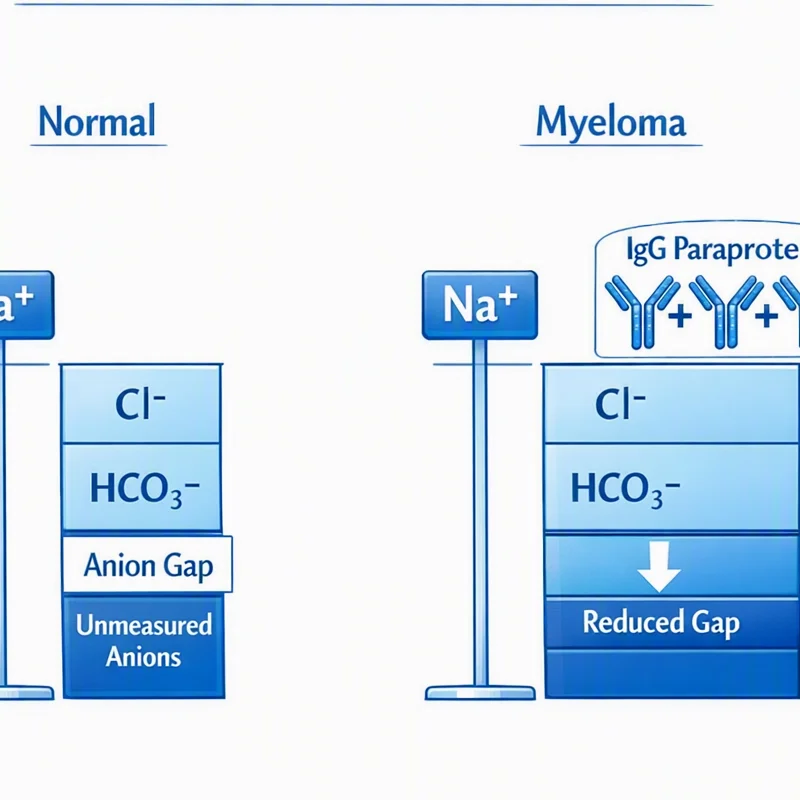
Another possible cause is multiple myeloma, a condition in which abnormal proteins can change the balance of measured and unmeasured ions. In some patients, the result becomes a useful clue that prompts further evaluation of serum proteins. The finding is not diagnostic on its own, but it can point toward a possible underlying cause.
Lithium exposure is another key consideration. Because lithium is an unmeasured cation, it can reduce the anion gap. Medication history is therefore necessary when the result seems unusual. In addition, the most common explanation of all may be measurement error, especially if the result is inconsistent with the clinical picture or with prior values.
Low values should be reviewed carefully because a falsely low result can skew the workflow. If the number does not fit the patient’s condition, repeat testing and verification of the original sample may be appropriate. The goal is to decide whether the result reflects a genuine biochemical finding or simply a laboratory issue.
Common low-gap considerations include:
- Hypoalbuminemia
- Plasma cell myeloma
- Lithium therapy exposure
- Measurement error
Adjusted Anion Gap and Albumin-Based Adjustment
The modified anion gap modifies the raw result to factor in low albumin. This process, known as albumin correction, supports result interpretation when albumin is reduced. Because albumin contributes to the normal electrical balance of the blood, low protein levels can make the uncorrected result look falsely reassuring.
A correction factor is often applied so the gap better reflects the true acid-base state. This matters most when a patient has hypoalbuminemia or other changes in protein levels. In those situations, the unadjusted number may minimize the severity of a metabolic disorder. The corrected result can reveal that the patient actually has a greater abnormality than the original calculation suggested.
Albumin correction does not substitute for clinical judgment. It simply improves the assessment of the result by accounting for a known confounder. When used correctly, it enhances the value of the anion gap as a clinical clue in acid-base assessment. This is especially helpful when the clinician is deciding whether further testing is needed.
The corrected value should be considered alongside other laboratory data and symptoms. If the patient’s serum chemistry indicates additional abnormalities, the corrected anion gap may support a more focused workup. The result summary should therefore include both the raw and corrected values when albumin is abnormal.
Typical Causes, Alert Symptoms, and Follow-Up Actions
The anion gap is most useful when it is paired with the correct next steps. A increased value, a decreased value, or a result that does not match the clinical picture may call for prompt review of the full picture. The most important question is not just whether the number is abnormal, but what underlying cause is behind it.
Red flags include symptoms or findings that suggest severe illness, such as altered mental status, rapid breathing, dehydration, shock, or worsening kidney function. In these cases, the laboratory pattern may indicate an immediate need for medical evaluation. The anion gap is part of the decision-making process, but it should never be used in isolation when the patient appears clinically unstable.
Frequent causes and contexts include renal failure, sepsis, and diarrhea. Renal failure can elevate the gap by limiting acid excretion. Sepsis can be associated with lactic acidosis. Diarrhea more often contributes to non-gap acidosis, but it still matters because the broader electrolyte pattern may shape diagnosis and treatment. In all of these situations, the result should be interpreted within the full clinical picture.
Practical next steps often include:
- Review the full electrolyte panel and related tests
- Evaluate serum bicarbonate changes and acid-base disturbance
- Review lactate, ketones, renal function, and toxin exposure
- Confirm whether the result could reflect measurement error
- Use albumin correction when protein levels are low
If symptoms are severe or the result is markedly abnormal, the patient may need urgent assessment rather than routine follow-up. A reliable workflow combines the calculator output, the reference interval, and the patient’s condition to support appropriate decisions.
Frequently Asked Questions
What is the expected anion gap interval?
The reference range depends on the laboratory’s reported range and testing method. There’s no single universal value, so the best approach is to use the interval printed on the report. Differences in lab variation can shift the expected result slightly.
How is the anion gap from lab values?
An anion gap calculator typically uses sodium level, serum chloride, and blood bicarbonate. A common method is sodium minus chloride and bicarbonate. The exact calculation may vary by laboratory, so always confirm the method used on the chemistry panel or metabolic panel.
What does a high anion gap mean?
A raised anion gap usually suggests metabolic acidosis, often due to increased anion gap metabolic acidosis. Common causes include lactate buildup, diabetic ketoacidosis, renal impairment, and toxic alcohol ingestion. The result is a diagnostic clue that should be interpreted with the clinical picture and other laboratory values.
What can cause a low anion gap?
A decreased anion gap can occur with decreased albumin, multiple myeloma, or lithium exposure exposure. Sometimes the cause is lab error, especially if the result does not match the patient’s condition. Repeating the test and reviewing the full serum chemistry can help clarify the finding.
Should albumin be used to correct the anion gap?
Yes, albumin adjustment is often helpful when albumin is low. The corrected anion gap provides better clinical interpretation because low protein levels can make the raw number look misleading. This adjustment improves the value of the result summary, especially when the goal is to identify an acid-base disorder accurately.