Can Potassium Be Included in the Anion Gap Calculation?
Yes, the short answer is that it can, potassium can be included in an anion gap formula, but it usually is not in the usual clinical formula. Most anion gap calculator tools rely on sodium, chloride, and bicarbonate because those values are the most common and practical for routine interpretation. Potassium is a real electrolyte and can be part of a alternate anion gap formula, but excluding it is the norm because it offers limited value for everyday clinical decision-making in most cases.
Even so, the choice of formula matters. If potassium is added, the number may change a little, which can affect the clinical interpretation of lab results in some situations. Knowing why potassium is typically excluded helps explain the logic behind the anion gap, electroneutrality, and the role of unmeasured anions in acid-base assessment.
How the anion gap is calculated to assess
The anion gap is a derived value that helps clinicians estimate the difference between measured positive and negative charges in the blood. It is anion gap in chronic kidney disease based on routine electrolytes in the serum chemistry panel, especially sodium, chloride, and bicarbonate. The result is not a direct measurement of one specific substance. Instead, it is a indicator that helps identify changes in acid-base balance.
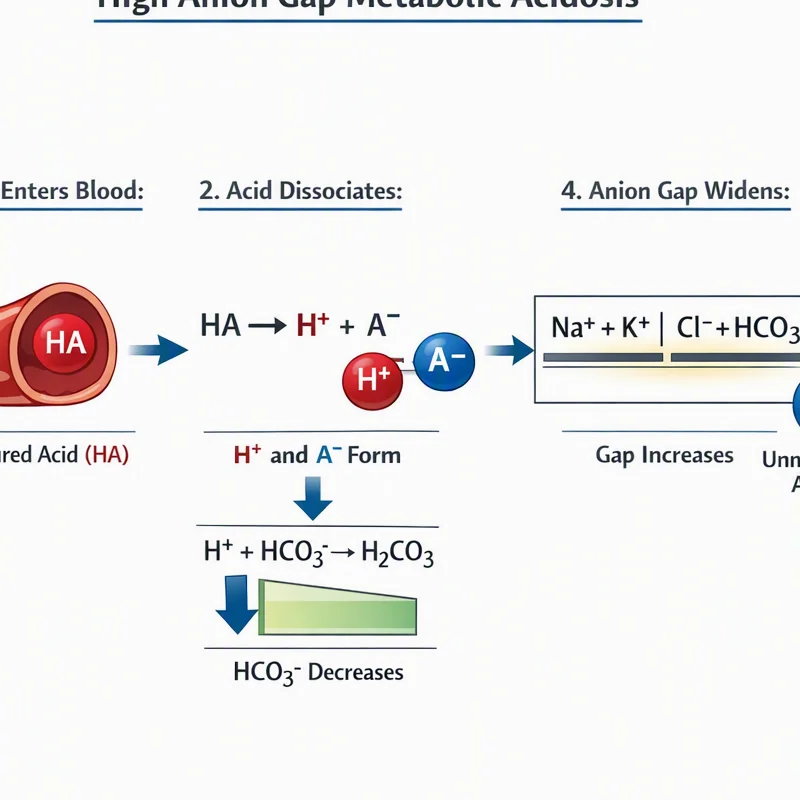
The idea behind the calculation comes from electroneutrality, meaning the body maintains a balance between positively charged ions and negatively charged ions. When the measured ions do not fully account for that balance, the difference is usually explained by unmeasured anions such as lactate, ketones, sulfate, phosphate, or various toxins.
In practice, the anion gap is most useful as a diagnostic tool for evaluating metabolic disorders, especially metabolic acidosis. A normal range or reference range depends on the lab and the specific formula used, so interpretation should always be tied to the local laboratory reference range and the full clinical picture.
How the anion gap calculator operates
An anion gap calculator uses inputs from a serum chemistry panel or electrolyte panel and performs a simple calculation. The most common inputs are serum sodium, serum chloride, and serum bicarbonate. Most calculators display the standard formula as:
Anion gap = sodium - (chloride + bicarbonate)
Some versions also include potassium, but others do not. This is because simple: the standard version is fast, widely accepted, and usually accurate enough for everyday use. A calculator may also show an adjusted anion gap when albumin is low, because albumin is one of the key unmeasured anions in blood.
The calculator is only as useful as the lab results put into it. Tiny differences in units, rounding, or the chosen formula can change the output. This is why the same patient can sometimes have a slightly different result depending on the tool, even when the underlying electrolytes are identical.
In clinical practice, the number is interpreted alongside the patient’s symptoms, blood gas findings, kidney function, and other chemistry values. The calculator is a reference, not a standalone diagnosis.
Is K included in the default formula?
In the standard anion gap formula, potassium is typically omitted. The standard calculation is sodium minus the addition of chloride and bicarbonate, which matches the most commonly used lab approach. Some previous or nonstandard formulas include potassium, but this is not the usual method in most modern settings.
The reason potassium is omitted is that its concentration is much lower than sodium, so including it usually affects the result only a little. In other words, potassium is a measured cation, but it does not materially improve routine interpretation in most cases. The value of the anion gap lies in identifying the presence of unmeasured cations and especially unmeasured anions that may indicate disease.
This choice supports the principle of electroneutrality while leaving the formula straightforward enough to use quickly. A standard calculator aims to highlight clinically meaningful changes, not tiny shifts that rarely alter the assessment.
So, to answer the main question directly: potassium can be included in a modified formula, but it is typically not part of the standard calculation used by most clinicians and calculators.
When potassium may be included in modified calculations
Potassium may be incorporated in a modified formula when a clinician needs a more conventional counting of measured cations, especially in special contexts. In these cases, the calculation may be modified to reflect a specific methodology, an older teaching model, or a lab’s own reporting convention.
One reason for modification is albumin. Because albumin strongly affects the measured gap, a low albumin level can make the result appear falsely reassuring or low. Clinicians may therefore use an adjusted anion gap or apply a correction before interpreting the number. This is especially relevant in acid-base disorders, where the underlying problem may be obscured by changes in protein concentration.
The delta gap is another related concept. It helps compare the change in the anion gap with the change in bicarbonate and can suggest whether more than one acid-base disturbance is present. In complex cases, the clinician may look beyond the standard calculation and examine whether the numbers fit the expected pattern.
Even then, potassium is not routinely required. Its inclusion is usually a matter of formula preference rather than a universal clinical standard. The exact method should always be interpreted in light of the laboratory reference range and the context of the patient’s overall metabolic state.
Clinical assessment of a high or normal anion gap
A raised anion gap usually suggests that additional acids are presenting in the blood. This frequently indicates acid-base acidosis, where bicarbonate is depleted while acid builds up. The anion gap helps identify the cause by indicating that the body may contain excess unaccounted anions.
Typical high-gap patterns include lactic acidosis, ketoacidosis, and renal insufficiency. In lactic acidosis, lactate rises due to poor oxygen delivery, shock, seizures, or other stress states. In ketoacidosis, ketone bodies accumulate, often in diabetes, starvation, or alcohol-related illness. In renal failure, acids that would normally be excreted build up over time.
A normal gap does not exclude disease. Some forms of metabolic acidosis produce a normal anion gap, especially when bicarbonate loss is balanced by chloride increase. That is why the clinical interpretation must account for the full electrolyte pattern and not lactic acidosis anion gap elevation just the calculated number. The chloride level and serum bicarbonate values are especially relevant here.
In practice, the anion gap is best used as part of a broader assessment of acid-base balance, not as a single yes/no test.
Typical causes of an elevated anion gap
An elevated anion gap often suggests that an acid load is present. Providers commonly think about toxic alcohols, salicylates, lactic acid, ketones, and retained acids from kidney dysfunction. The pattern can assist with urgent evaluation and treatment.
Toxic alcohols such as methanol and ethylene glycol are classic reasons of a high gap. These substances are metabolized into acids that increase the gap and can produce severe toxicity. Salicylates can also alter acid-base status and may cause a mixed picture, sometimes including respiratory alkalosis alongside metabolic acidosis.
Uremia, which is associated with advanced kidney dysfunction, is another major source. When the kidneys cannot clear acids efficiently, the gap rises. This is one reason the anion gap is a valuable clue in evaluating renal failure and other metabolic disorders.
Other causes include lactic acidosis and ketoacidosis, which are often recognized quickly because they fit the clinical setting. The key point is that a high gap suggests the presence of acids not directly measured by the routine electrolyte panel. That is why the anion gap calculator remains a helpful diagnostic tool.
Common causes of a decreased anion gap
A low anion gap is rarer than a raised one, but it can be important. One major cause is hypoalbuminemia. Since albumin is a major negatively charged protein, a reduction in albumin lowers the measured gap. This can make the result seem deceptively normal even when another disorder is present.
Paraproteinemia is an additional classic cause. Abnormal proteins in the blood, such as certain monoclonal proteins, can behave like unmeasured cations and reduce the gap. This is why a low value may occasionally suggest a plasma cell disorder or related condition.
Laboratory error should also be considered. Repeating the chemistry panel can help verify whether the result is real. Since the gap is calculated from several measured values, a small measurement issue in sodium, chloride, or bicarbonate can affect the outcome.
Hypermagnesemia is a further possible contributor because excess magnesium can act as a cation and alter the balance. Less commonly, other cation abnormalities or specimen issues may influence the result. When the number is unexpectedly low, the first step is often to verify the electrolytes and examine the albumin level.
Frequently asked questions about potassium and the anion gap
Is potassium part of the standard anion gap calculation?
No. The standard anion gap calculation usually includes sodium, chloride, and bicarbonate, but not potassium. Some modified formulas add potassium, but most modern anion gap calculator tools use the standard version because it is easier and clinically sufficient for most interpretation.
Why is potassium usually excluded from the anion gap formula?
Potassium is usually excluded because its concentration is relatively small compared with sodium, so adding it rarely changes the interpretation in a meaningful way. Leaving it out makes the anion gap formula simpler to use while still capturing the clinically important relationship between measured ions and unmeasured anions.
When might a clinician add potassium in an anion gap calculation?
A clinician might add potassium when using a modified formula, an previous teaching method, or a lab-specific method. This may occur during thorough review of acid-base disorders or when a calculated value must match a particular format. Even then, potassium is not routinely necessary for everyday evaluation.
Does including potassium change the interpretation of metabolic acidosis?
Typically only slightly. Because potassium contributes a relatively small amount to the total, the difference is often minimal. However, in borderline cases, a small change could affect whether a result falls in or beyond the reference range. The larger interpretive issues still come from albumin, the presence of lactic acidosis, ketoacidosis, or renal failure.
Can an anion gap calculator use different formulas depending on the lab?
Certainly. Different labs and tools may use alternative formulas or correction methods, especially when considering albumin or an adjusted anion gap. A reliable calculator should align with the reporting method used by the serum chemistry panel or electrolyte panel being interpreted. That is why the same lab results can generate slightly different outputs depending on the calculator design and the chosen calculation.